Complete guide to Oscar Wilde’s The Model Millionaire – story summary in flipbook style, 50+ MCQs with answers, and an interactive quiz for Class 11 students.
👉 Let’s explore “ The Model Millionaire”
Oscar Wilde’s short story “The Model Millionaire” is one of the most popular lessons in Class 11 English literature. It is a simple yet powerful tale that highlights how kindness and compassion can sometimes matter more than wealth and status. In this post, we bring you the complete package — a detailed story summary presented in flipbook style, more than 50 multiple-choice questions (MCQs) with answers, and an interactive quiz to test your knowledge. Whether you are a Class 11 CBSE/ISC student, an English literature enthusiast, or someone preparing for competitive exams, this resource will help you understand the plot, characters, themes, and moral lessons of The Model Millionaire in an engaging way.
By the end of this post, you will be able to:
- Revise the summary of The Model Millionaire at a glance.
- Practice MCQs with detailed explanations for exam preparation.
- Attempt an interactive online quiz to check your learning instantly.
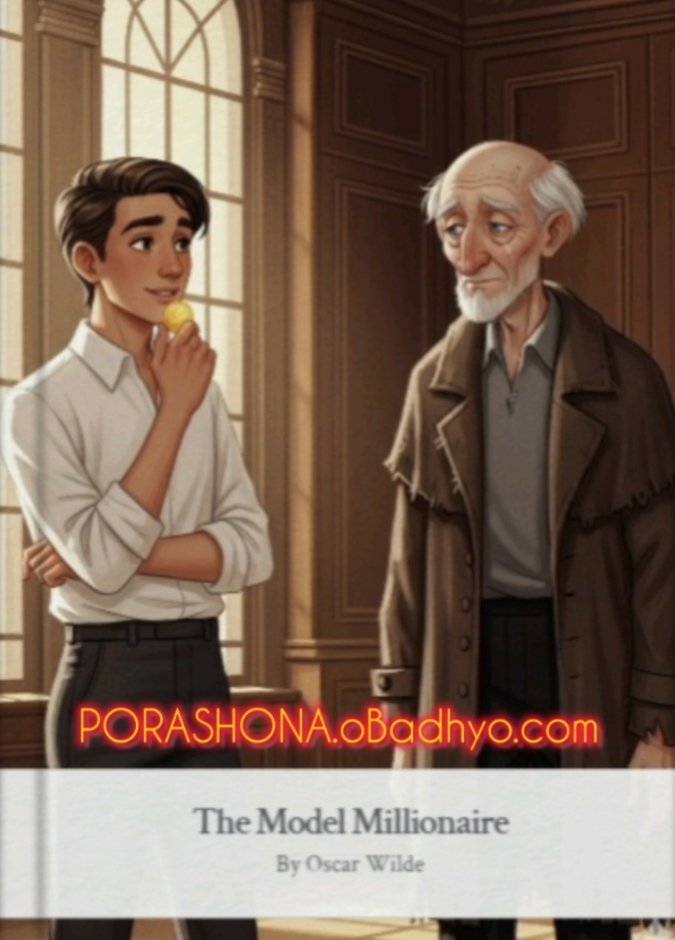
📘 The Model Millionaire — 50 MCQs with Answers & Explanations
Characters & Background
- Who is the protagonist of the story The Model Millionaire?
A) Alan Trevor
B) Hughie Erskine
C) Colonel Merton
D) Baron Hausberg
Answer: B. Hughie Erskine — The story revolves around his life and actions. - How is Hughie Erskine described in the story?
A) Rich and arrogant
B) Handsome but poor
C) Ugly but clever
D) Wealthy but selfish
Answer: B. Handsome but poor — He is good-looking and kind-hearted but financially weak. - Who is Laura Merton?
A) Hughie’s fiancée
B) Alan Trevor’s sister
C) Baron’s daughter
D) Colonel’s niece
Answer: A. Hughie’s fiancée — Hughie is in love with Laura. - Who is Colonel Merton?
A) A friend of Alan Trevor
B) Laura’s father
C) Baron’s business partner
D) Hughie’s uncle
Answer: B. Laura’s father — He is practical and demands wealth for his daughter’s marriage. - What condition did Colonel Merton set for Hughie to marry Laura?
A) He must travel abroad
B) He must paint a portrait
C) He must have £10,000
D) He must impress Baron Hausberg
Answer: C. He must have £10,000 — This is the central conflict. - Who is Alan Trevor?
A) A businessman
B) A painter
C) A banker
D) A soldier
Answer: B. A painter — He is Hughie’s close friend. - How is Alan Trevor described?
A) Short and weak
B) Rugged, eccentric painter
C) A rich aristocrat
D) A retired colonel
Answer: B. Rugged, eccentric painter — Wilde portrays him humorously. - Who is Baron Hausberg?
A) A poor beggar
B) A millionaire
C) A soldier
D) A politician
Answer: B. A millionaire — One of the richest men in Europe. - In what disguise does Baron Hausberg first appear?
A) A lawyer
B) A servant
C) A beggar-model
D) A soldier
Answer: C. A beggar-model — He poses as a poor model for Alan. - Where does Hughie meet the beggar-model?
A) In the park
B) In Alan Trevor’s studio
C) In a bank
D) At Colonel Merton’s house
Answer: B. In Alan Trevor’s studio — This meeting changes Hughie’s fate.
Plot & Actions
- What did Hughie feel when he saw the beggar-model?
A) Anger
B) Pity
C) Jealousy
D) Suspicion
Answer: B. Pity — He was deeply moved by the beggar’s condition. - How much money did Hughie give to the beggar?
A) £1
B) A sovereign (gold coin)
C) £100
D) Nothing
Answer: B. A sovereign — His last coin, given out of kindness. - Why was giving the coin significant?
A) It was borrowed
B) It was his last money
C) It was fake
D) It belonged to Laura
Answer: B. It was his last money — A real sacrifice. - How did Alan Trevor react when Hughie pitied the beggar?
A) He laughed
B) He got angry
C) He told Hughie not to disturb the model
D) He ignored him
Answer: C. He told Hughie not to disturb the model — Alan was serious about his work. - Who later told Hughie the beggar’s true identity?
A) Colonel Merton
B) Laura
C) Alan Trevor
D) Baron himself
Answer: C. Alan Trevor — He reveals it afterwards. - What was the beggar’s actual identity?
A) A spy
B) A painter
C) A millionaire
D) Colonel’s friend
Answer: C. A millionaire — Baron Hausberg. - Why did Baron Hausberg disguise himself as a beggar?
A) To punish Hughie
B) To observe human kindness
C) To test Alan’s painting
D) To earn sympathy
Answer: B. To observe human kindness — He enjoyed such disguises. - What gift did Baron Hausberg give Hughie?
A) A gold coin
B) A house
C) A cheque of £10,000
D) A job offer
Answer: C. A cheque of £10,000 — The exact amount needed. - What was the result of Baron’s gift?
A) Hughie could marry Laura
B) Hughie became a painter
C) Hughie traveled abroad
D) Hughie left London
Answer: A. Hughie could marry Laura — The conflict is resolved. - How does the story end?
A) Hughie remains single
B) Hughie marries Laura
C) Baron reveals he was poor
D) Alan marries Laura
Answer: B. Hughie marries Laura — Thanks to the Baron’s generosity.
Themes & Messages
- What is the central theme of the story?
A) Greed brings happiness
B) Love is meaningless without wealth
C) Kindness is rewarded
D) Money is everything
Answer: C. Kindness is rewarded — The main moral. - Why is Hughie called a “model millionaire”?
A) Because he painted models
B) Because of his fortune
C) Because of his noble character
D) Because of Colonel’s praise
Answer: C. Because of his noble character — True richness lies in virtue. - Which literary device does Wilde use most in the story?
A) Irony
B) Hyperbole
C) Simile
D) Metaphor
Answer: A. Irony — The beggar was a millionaire. - What does the story satirize?
A) British politics
B) Victorian class system
C) Religion
D) Science
Answer: B. Victorian class system — Rich vs. poor and materialism. - What is ironic about Hughie’s gift?
A) It was worthless
B) It was unnecessary
C) It brought him wealth in return
D) It made Alan angry
Answer: C. It brought him wealth in return — He gave little but got a fortune.
Character Insights
- How is Colonel Merton portrayed?
A) Romantic
B) Materialistic
C) Artistic
D) Generous
Answer: B. Materialistic — He values money above all. - What quality makes Hughie stand out?
A) Ambition
B) Compassion
C) Cunning
D) Strength
Answer: B. Compassion — He is kind-hearted. - What is Alan Trevor’s role in the story?
A) Villain
B) Narrator
C) Bridge between Hughie and the Baron
D) Comic relief only
Answer: C. Bridge — Through him Hughie meets the Baron. - What best describes Baron Hausberg?
A) Stingy
B) Generous and witty
C) Poor but proud
D) Arrogant nobleman
Answer: B. Generous and witty — Despite being rich, he was kind. - What lesson does Wilde stress through Hughie’s marriage?
A) Wealth is unnecessary
B) Goodness can change destiny
C) Artists earn more than millionaires
D) Life is unfair
Answer: B. Goodness can change destiny — Hughie’s virtue wins.
Deeper Meaning
- What does the beggar’s disguise symbolize?
A) Power of poverty
B) Deceptive appearances
C) Decline of art
D) Weakness of wealth
Answer: B. Deceptive appearances — Things aren’t what they seem. - How does Wilde criticize society?
A) By showing Colonel’s strict demand
B) By mocking Alan
C) By praising Baron’s wealth
D) By showing Laura’s ignorance
Answer: A. Through Colonel’s demand — Wealth over love. - What type of short story is The Model Millionaire?
A) Detective
B) Satirical moral tale
C) Fairy tale
D) Historical fiction
Answer: B. Satirical moral tale — Satire + moral lesson. - Which emotion dominates Hughie’s character?
A) Anger
B) Pity
C) Jealousy
D) Arrogance
Answer: B. Pity — He feels pity for the beggar. - What is the significance of £10,000 in the story?
A) Colonel’s wealth
B) Hughie’s inheritance
C) The marriage condition
D) Baron’s joke
Answer: C. The marriage condition — Turning point of the plot.
Author & Style
- Who wrote The Model Millionaire?
A) Charles Dickens
B) Oscar Wilde
C) William Thackeray
D) George Eliot
Answer: B. Oscar Wilde — Irish playwright and wit. - What is Wilde’s style in this story?
A) Dark and tragic
B) Humorous and ironic
C) Plain and factual
D) Poetic and lyrical
Answer: B. Humorous and ironic — Light satire with humor. - Why is the title ironic?
A) Because the beggar was poor
B) Because Hughie had no money but was “model”
C) Because Colonel was wealthy
D) Because Laura loved Hughie
Answer: B. Hughie had no money but was a “model millionaire” in virtue. - Which character represents true wealth?
A) Alan
B) Colonel
C) Hughie
D) Baron
Answer: C. Hughie — Wealth of heart. - Why did Wilde include Alan Trevor?
A) To delay the plot
B) To add humor and link Hughie with Baron
C) To serve as antagonist
D) To confuse the reader
Answer: B. To add humor and create the link.
Ending & Moral
- What happens after Hughie’s generosity?
A) He loses money forever
B) He is rewarded with a fortune
C) He is scolded by Alan
D) He is mocked by Colonel
Answer: B. Rewarded — Baron gifts £10,000. - Who played the biggest role in Hughie’s happy ending?
A) Laura
B) Alan Trevor
C) Baron Hausberg
D) Colonel Merton
Answer: C. Baron Hausberg — His gift solved the problem. - What does Wilde suggest about appearances?
A) They are always reliable
B) They can be deceptive
C) Beauty ensures success
D) Poverty is permanent
Answer: B. They can be deceptive — Beggar was a millionaire. - What virtue does Wilde praise most?
A) Intelligence
B) Kindness
C) Wealth
D) Ambition
Answer: B. Kindness — Heart over money. - What type of irony dominates the story?
A) Dramatic irony
B) Verbal irony
C) Situational irony
D) Cosmic irony
Answer: C. Situational irony — Beggar is a millionaire.
Exam-Oriented
- Who is described as “a model millionaire”?
A) Baron Hausberg
B) Hughie Erskine
C) Colonel Merton
D) Alan Trevor
Answer: B. Hughie Erskine — Because of his goodness. - Which character is most practical?
A) Hughie
B) Laura
C) Colonel
D) Baron
Answer: C. Colonel — He values money above love. - How did Hughie’s financial problem get solved?
A) He won a lottery
B) Alan gave him money
C) Baron’s gift
D) Colonel forgave him
Answer: C. Baron’s gift — Cheque of £10,000. - What is the overall message of the story?
A) Wealth determines worth
B) Love is meaningless without wealth
C) True wealth lies in character
D) Millionaires are selfish
Answer: C. True wealth lies in character — Central theme. - Why is The Model Millionaire memorable as a short story?
A) Complex plot
B) Dark tragedy
C) Simple tale with humor, irony, and moral
D) Detailed description of London
Answer: C. Simple tale with humor, irony, and moral — Wilde’s strength.
The Model Millionaire — Quiz (50 MCQs)
(shahnawaz)

Leave a Reply